
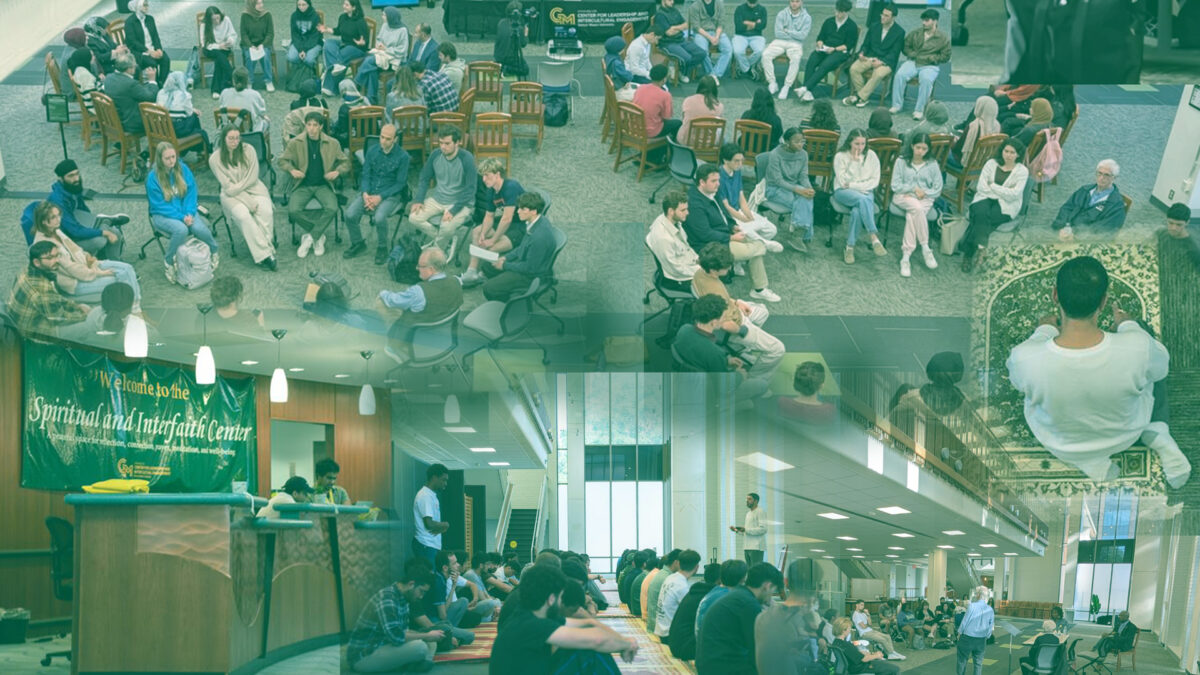
A new campus venue offers a tranquil environment for reflection, meditation, prayer, and connection.
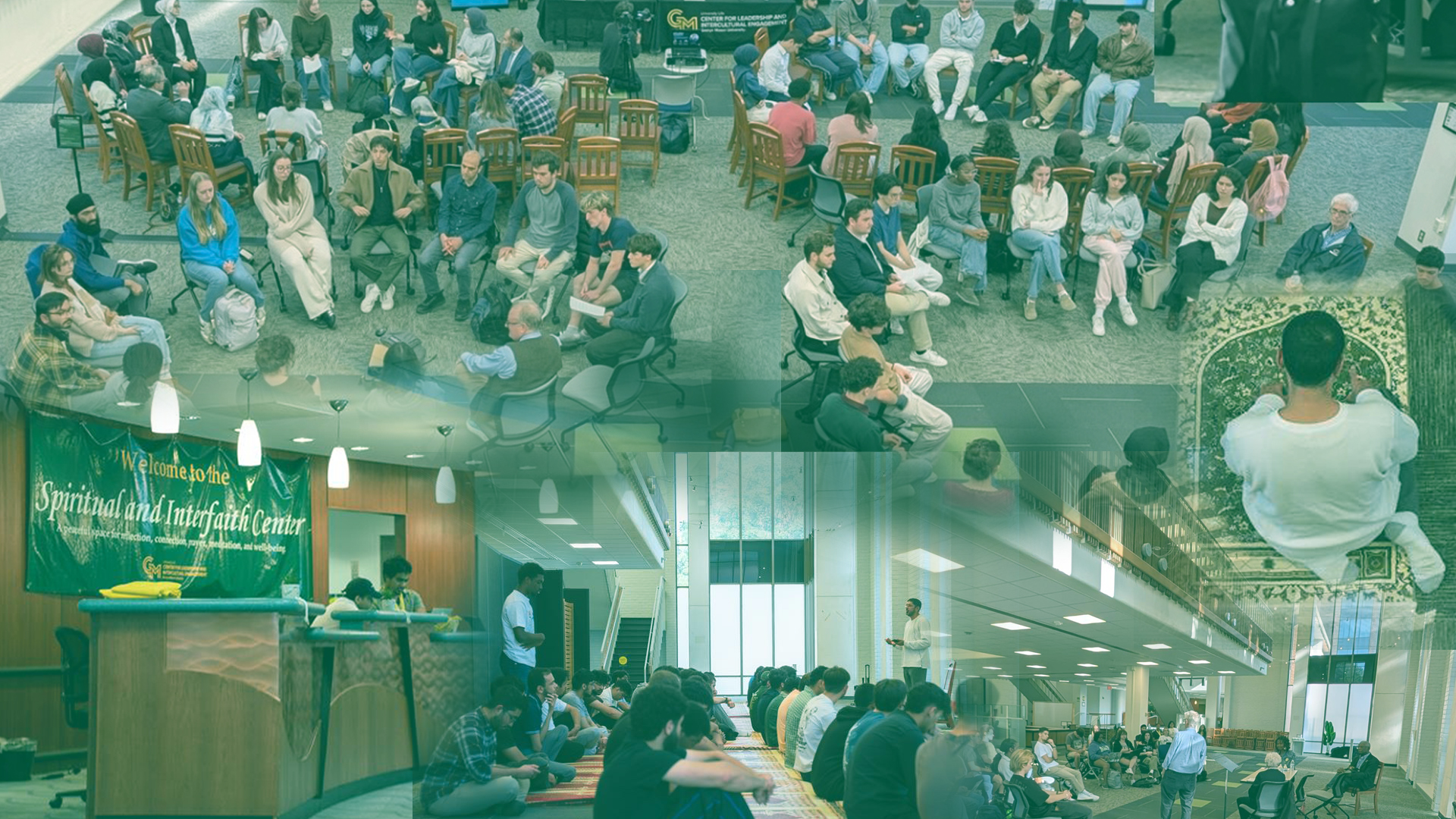
By Susan Grunder
Open to all students, faculty, and staff regardless of spiritual or cultural background, the Spiritual and Interfaith Center serves as a sanctuary for personal growth and interfaith dialogue. Located in Fenwick A on the Fairfax campus, this multi-level center offers the George Mason community a peaceful retreat.
The lower level features a quiet space for mindfulness, contemplation, and prayer, while the upper level offers a semi-quiet area for community engagement, conversation, and studying. The center also provides reservable spaces for campus groups for interfaith programming, collective prayer, celebrations of spiritual holy days, and group mindfulness activities. It will also house offices for the Campus Ministry Association—the independent association of chaplains who work with student organizations—and their affiliates.
Creating this dedicated space addresses a growing demand and is in line with national trends indicating a greater focus on spiritual well-being on college campuses. Other institutions, including Dartmouth College, the University of North Carolina at Greensboro, and Elon University, have made interfaith spaces an integral part of their campus communities.
University Life Vice President Rose Pascarell noted that the Center supports student development. “Students come to us from all different faith backgrounds, and some students rely on their faith, or faith-based learnings to inform the way they move through their college experience. To be able to explore that with students, to be able to support students in that growth is as important as the socio-emotional growth they experience in college.”
Pascarell sees the center contributing to students’ abilities to navigate a complex world. “We’re living in a world where we are witnessing increased conflict, and it seems to me that bringing students together around their faith practices is one way to have difficult conversations in productive and supportive ways,” she added.
Cultivating Community
The center includes staff and will have a programming board to help direct a variety of interfaith programs through collaboration with internal and external partners. The center will also sponsor a student-led interfaith council. Central to the programming is the hope that George Mason campus community members will discover and appreciate commonalities and differences, expanding their capacity for empathy.
Students have already engaged with the center. The Muslim Student Association (MSA) held Friday prayers in the space last spring. “People really love it and appreciate being able to host Friday prayer in the new space,” according to the MSA president. “The first time in particular was truly beautiful and a bit of a full-circle moment since our 2019 MSA president gave the sermon.” The MSA and other student groups have been advocating for increased space for years. It has quickly become a place for students to decompress and focus on mental health.
Community members have access to supportive items such as prayer rugs, meditation cushions, dividers, noise machines, a podium, and more.
Susan Grunder is the graduate professional assistant for spiritual capacity building and pluralism initiatives at George Mason University.